http://itec.pbwiki.com/TechExploration-Project-%28Watson%29?doneSave=1
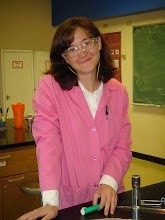
The following post was made by Rachel Watson on Saturday, February 10th
For the Exploration of Technologies project I chose to learn how to create podcasts and instituted the use of these podcasted lectures in the General Microbiology class for which I am the instructor. I coach the cross-country ski team (along with Christi) and thus have to miss a couple of Fridays in the spring semester. These podcasts replaced the lecture for those days and were available online as well as being played in the classroom at the regularly-scheduled lecture time.
I had never made a podcast before and so I proceeded with much trial and error. I have written a description of the procedure that I used to make the podcasts and have included things that went well and not so well. I also include some formative evaluation in the form of student opinions about the podcasts.
1) Using an InFocus Projector and a Panasonic digital video camera, I took a video of the lecture. The first time, I tried to jump in front of the camera and screen each time I did a demo. For the later podcasts, I took footage of demos in a different location and did a small amount of editing.
2) I imported the video into iMovie (I use a MacBook Pro).
3) Using iMovie, I edited the footage.
4) For the first podcast I made, I exported it as a quicktime movie and then used a program called rooVid Lite to compress the movie, turning it into an MP4. This worked great and was very visible. For the second podcast, I exported for iPod. Unfortunately, the file size was small and the students had a hard time seeing it.
5) To make a podcast site, I used iWeb.
Detailed instructions for iWeb:
a) File - New site
b) Choose the web template
c) Enter textual information
d) Click on Podcast
e) Edit textual information and pictures
f) Click on Podcast
g) File - Publish to a folder
* For this to work, you must publish to a server and you must know the web address where this will go.
Using these methods, I have now created three podcasts that can be found at
http://multimedia.uwyo.edu/cboggs_multimedia/podcast/molb/Podcast/Podcast.html
In order to obtain student feedback, I provided a discussion forum on WebCT where students could voluntarily post comments. Here were a few of the responses:
Author: Rachel Watson (MOLB2021watsSp07)
Date: Wednesday, January 24, 2007 8:17pm
Just thought I would get a discussion started about the podcast! Did you like it? Any
suggestions?
Date: Thursday, January 25, 2007 11:51am
I love the podcast. It helps with getting things done outside of class such as homework
and the reports in lab. A suggestion I would have for you is when you go to talk to the
class in front of the projector, that you would do that seperate and edit it in. It becomes
very hard to see you and the model when you are standing in front of the light of the
projector. Hope this helps, and hope you do it again!!
Date: Sunday, February 4, 2007 1:51pm
I think that the podcast is an awesome tool for students and teachers, I think it is a great
way to have class without missing it.
Date: Thursday, January 25, 2007 12:32pm
I did like the podcast. It allowed me to view it when I had the time and could really sit
down and pay attention. I also liked it because I could rewind the tape if I missed
something or just wanted some clarification. I am not sure I would say that I like it
better than lectures and having that teacher-class interaction. Maybe if all lectures were
taped as well...that could be somewhat cool. Then you still get the in-class interaction
but can review the lecture later online if need be.
Author: Rachel Watson (MOLB2021watsSp07)
Date: Friday, January 26, 2007 3:22pm
Thanks so much for your feedback! I am planning three more podcasts this semester so
I'll take your suggestions to help improve those.
Date: Sunday, January 28, 2007 6:23pm
I liked the podcast as well. I did end up going to class and watching it
on the big screen but I went back and viewed certain parts again. It was
a nice learning tool. You added humor which made if fun to watch!
Date: Sunday, January 28, 2007 6:25pm
The lighting was a little off but didn't really get in the way too much.
Date: Tuesday, January 30, 2007 2:46pm
I think that podcast is a really good idea, although I wouldn't mind missing a day of
class!!! There were only a few things that i didn't like about it; the lighting was kind of
weird and knowing where to stand to show us the visuals was a little off. Other than that
I think it helps, because if I missed something I could just go back and watch it again!
Date: Wednesday, January 31, 2007 9:45am
I liked the podcast but the only thing is the color is distorted making
some images hard to see, and if you could try to stay centered
when showing models that would help too. Other than that it was
really cool.
In summary, the use of podcasts in General Microbiology has, I think, been successful. I plan to continue using these as a tool in future semesters. I do think, based on student recall in subsequent classes, that their use would be most valuable to supplement, rather than replace the lecture. However, in the event that a lecture has to be missed, they provide a fantastic option, that, based on previous experience worked better (for me) than guest lecturers.
Sunday, May 6, 2007

Sunday, April 15, 2007
Using the online survey tool
The online survey tool that I used to create the survey was accessed at https://survey.uwyo.edu/
-After typing in this URL, a welcome box will appear and within that box it will question if you would like to log in. Click on the icon that says here.
-Login
-Click on New Survey on the top menu
-Type a title and select "from scratch"
-Click the insert button to add and item
-Choose the item type (this is the question type) There are many types of questions possible, ranging from simple open-ended to choice-multiple answeres. I largely used choice-one answer (option buttons)
-Enter the question and possible answers (each answer can be scored to assist with later analysis)
- For my answers, I used the Likert scale: Strongly agree, Agree, Neutral, Disagree, Strongly disagree
-Click on save on the bottom menu bar
-When all the questions have been entered, click on done (lower menubar)
-Change the status to open
-To find the URL to send to respondents: go to deploy and record the e-mail link
-After typing in this URL, a welcome box will appear and within that box it will question if you would like to log in. Click on the icon that says here.
-Login
-Click on New Survey on the top menu
-Type a title and select "from scratch"
-Click the insert button to add and item
-Choose the item type (this is the question type) There are many types of questions possible, ranging from simple open-ended to choice-multiple answeres. I largely used choice-one answer (option buttons)
-Enter the question and possible answers (each answer can be scored to assist with later analysis)
- For my answers, I used the Likert scale: Strongly agree, Agree, Neutral, Disagree, Strongly disagree
-Click on save on the bottom menu bar
-When all the questions have been entered, click on done (lower menubar)
-Change the status to open
-To find the URL to send to respondents: go to deploy and record the e-mail link
Friday, April 13, 2007
Survey creation
I continued to read in the survey texts and made notes on creating a cover letter:
The Cover Letter
I. Purpose
a. Explain the project
b. Win the cooperation of respondents
II. Needs to answer the questions:
a. What is this about?
b. Who wants to know?
c. Why do they want this?
d. Why was I picked?
e. How important is this?
f. Will this be difficult?
g. How long will this take?
h. Will it cost me anything?
i. Will I be identified?
j. How will this be used?
k. What’s in it for me?
l. When should I do it?
III. Should not be too stiff, too formal, not too sophisticated but not condescending.
IV. Address it Dear Respondent or if you know the respondents: Dear General Microbiology Students, Dear so and so (greater response rate)
Show respect to the reader, don’t demand
V. Appearance matters - make it look nice to increase the chance of response.
I then created the survey trying my best to adhere to the advice given in the text. I wanted to use the new online UWyo survey tool. Unfortunately, I found it to be incompatible with my Safari browser and had to load a new Firefox browser. Once this was complete, I was able to type questions into the online survey tool. Following is the cover letter and the link to access the online survey.
Hello everyone,
As many of you already know, I am always searching for new techniques and media to improve student access to course material and appeal to students with a wide variety of learning styles. With this goal in mind, I have worked with others to create online notes, dichotomous keys, the summary of biochemical tests, and the Virtual Edge laboratory supplements. These are provided to you in their current form due to previous studies and questionnaires. The opinions of the students in this course are the determining factor in whether a new tool is introduced and continually used.
In order to collect information on student opinion an online questionnaire has been developed to assess your opinions regarding podcast lectures. This questionnaire has been designed so that you can complete it very quickly and easily. It takes only a few minutes, and you need only select a response from the list of options provided after each question. A forum for additional suggestions is also provided at the end of the survey.
This survey is completely voluntary and anonymous. You can be absolutely sure that all of the information you provide is strictly confidential, and no individual student will be identified. Should you choose to complete this survey your answers will be combined with those of your classmates and used only for statistical analysis to help determine whether further use of podcast lectures is warranted.
Your honest opinions, whether favorable or unfavorable, are very necessary to ensure that General Microbiology is taught in the most effective manner possible. The results of this survey will determine the extent to which podcast lectures will be available to future students. Your candid opinion is greatly appreciated.
The survey is web based and can be accessed at https://survey.uwyo.edu/TakeSurvey.aspx?SurveyID=78L28m6
If you have any questions about the survey or how the data will be used please contact me at rwatson@uwyo.edu or Christi Boggs at cboggs@uwyo.edu.
Thank you for your help; you all Rock My World,
Rachel
The Cover Letter
I. Purpose
a. Explain the project
b. Win the cooperation of respondents
II. Needs to answer the questions:
a. What is this about?
b. Who wants to know?
c. Why do they want this?
d. Why was I picked?
e. How important is this?
f. Will this be difficult?
g. How long will this take?
h. Will it cost me anything?
i. Will I be identified?
j. How will this be used?
k. What’s in it for me?
l. When should I do it?
III. Should not be too stiff, too formal, not too sophisticated but not condescending.
IV. Address it Dear Respondent or if you know the respondents: Dear General Microbiology Students, Dear so and so (greater response rate)
Show respect to the reader, don’t demand
V. Appearance matters - make it look nice to increase the chance of response.
I then created the survey trying my best to adhere to the advice given in the text. I wanted to use the new online UWyo survey tool. Unfortunately, I found it to be incompatible with my Safari browser and had to load a new Firefox browser. Once this was complete, I was able to type questions into the online survey tool. Following is the cover letter and the link to access the online survey.
Hello everyone,
As many of you already know, I am always searching for new techniques and media to improve student access to course material and appeal to students with a wide variety of learning styles. With this goal in mind, I have worked with others to create online notes, dichotomous keys, the summary of biochemical tests, and the Virtual Edge laboratory supplements. These are provided to you in their current form due to previous studies and questionnaires. The opinions of the students in this course are the determining factor in whether a new tool is introduced and continually used.
In order to collect information on student opinion an online questionnaire has been developed to assess your opinions regarding podcast lectures. This questionnaire has been designed so that you can complete it very quickly and easily. It takes only a few minutes, and you need only select a response from the list of options provided after each question. A forum for additional suggestions is also provided at the end of the survey.
This survey is completely voluntary and anonymous. You can be absolutely sure that all of the information you provide is strictly confidential, and no individual student will be identified. Should you choose to complete this survey your answers will be combined with those of your classmates and used only for statistical analysis to help determine whether further use of podcast lectures is warranted.
Your honest opinions, whether favorable or unfavorable, are very necessary to ensure that General Microbiology is taught in the most effective manner possible. The results of this survey will determine the extent to which podcast lectures will be available to future students. Your candid opinion is greatly appreciated.
The survey is web based and can be accessed at https://survey.uwyo.edu/TakeSurvey.aspx?SurveyID=78L28m6
If you have any questions about the survey or how the data will be used please contact me at rwatson@uwyo.edu or Christi Boggs at cboggs@uwyo.edu.
Thank you for your help; you all Rock My World,
Rachel
Sunday, March 25, 2007
research
The objectives of this project are to plan, design, and develop an online survey to assess students’ opinions of three podcasted lectures used this spring semester of 2007 in General Microbiology.
I have begun by consulting educational literature (e.g. The Survey Research Handbook by Pamela L. Alreck and Robert B. Settle) about the creation of a representative survey tool. I have read chapter 4 of this book about composing questions. The following is an outline of this chapter:
Basic Attributes of Questions
1) Focus, brevity and clarity
a) Focus - every question should focus on a single, specific issue. Ask precisely what it is that you (or the sponsor) want to know.
b) Brevity - short questions are less prone to error, more likely to be concise.
c) Clarity - the meaning of the question must be clear to all respondents (not open to multiple interpretations)
2) Expressing the question
a) Vocabulary - Use words that are in the core vocabulary of virtually all respondents. Don’t use fancy vocab. because the ultimate measure of sophistication of a survey tool is generating reliable data.
b) Grammar - break compound sentences into simple sentences. Eliminate superfluous words.
3) Instrumentation Bias and Error
a) Be certain that criteria are simply stated.
b) The question must be applicable to all respondents.
c) Avoid examples that are among those that a respondent might list. This will likely lead the respondents to list these examples to the exclusion of others.
d) Don’t pressure your respondents to recall difficult things. (e.g. How many times per week did you wash your toilet in 1982?)
e) Avoid overgeneralizations and overspecificity (things people couldn’t remember in detail)
f) Avoid using wording that is overemphatic - this will likely draw a particular response.
g) Check and recheck to be sure that the words used in the survey have a common meaning to everyone.
h) No double-barreled questions - 2 questions within one item. Ask yourself whether part of the question might be true and part false?
i) Leading questions create bias.
j) Watch for loaded questions (e.g. making it sound as though if you answer no to this question you don’t value human life.)
k) Be certain the question is as free of threat as is possible.
4) Sources of Response Bias
a) Social Desirability - respondents are likely to report what’s socially acceptable, rather than their true answers. Wording can be changed in such a way that the question is less likely to evoke the socially desirable response (e.g. provide alternatives without stating the norm!)
1)) If a respondent feels the researcher is looking for a certain response, they may well provide it!
How to avoid this?
- assure respondents that an honest answer is more valuable.
- don’t make one response appear more positive than another.
2)) Avoid yes or no or positive / negative responses. Some people have a tendency to always agree and others to always disagree. This can also show the respondent an overall negative/positive bias.
3)) Avoid questions that invite respondents to seek prestige (e.g. On a scale of 1 to 10, rate yourself in terms of self-reliance). Try to design questions that show respect to everyone.
4)) Reduce threat (e.g. instead of asking: What would you do if you lost your spouse?, ask: How might people might cope with the loss of a spouse?)
5)) Avoid questions that evoke hostility but in the event that that can’t be done, be sure to give the respondent ample lease to express his/her feelings. That way, he/she will be less likely to carry hostile feelings throughout the survey.
6)) It may not be necessary to tell respondents who is sponsoring a survey as that may generate bias.
7)) If you set a frame of reference in one question (e.g. in the past five years) respondents may be confused in the next question, if no new frame of reference is set.
8)) The order of questions may affect the response:
initiation, routine and fatigue
*List less important questions first
*Vary questions and make them unique to guard against routine.
*Keep the list short
9)) Extremity bias - difficult to distinguish shades of gray on a 1 to 10 scale so people may tend to choose the extremes (1 or 10). Use only as many points as are necessary (pertinent).
5) Question Format
a) Unstructured (open-end) questions
1)) Do not give dimension (range) upon which respondents can answer.
2)) Respondents rarely answer in an expected way
3)) Often produce data that aren’t directly comparable. - Must group data when editing and or postcoding which is laborious and open to interpretation of the investigator.
4)) More prone to recording error.
5)) likely to be lower response rate, more missing data, and fewer random responses.
b) Structured - provide responses
1)) Take time and effort to frame these questions BUT THEY ARE BETTER!
2)) May loose richness and variety of response but impossible to keep this anyway in a mass survey. So conduct a focus group first to get a feel for variety and richness.
3)) Choosing categories for structured questions.
a)) An all-inclusive list
Every conceivable answer must fit into a category.
Advisable to include on open “other” category.
b)) a mutually exclusive list
No overlapping categories
c)) Meaningful clusters
Don’t have too much variation in meaning within a category.
d)) Size and number of categories
Upper limit of six to eight categories.
“If there is a doubt about how precise or fine-grained the data must be, it’s best to use the larger number of more narrow categories.” because they can be easily combined later.
4)) Verbal and numeric categories
a)) If the answer can be in number form than that is better. How many years of formal education have you completed?
b)) numeric data can easily be categorized later.
I have begun by consulting educational literature (e.g. The Survey Research Handbook by Pamela L. Alreck and Robert B. Settle) about the creation of a representative survey tool. I have read chapter 4 of this book about composing questions. The following is an outline of this chapter:
Basic Attributes of Questions
1) Focus, brevity and clarity
a) Focus - every question should focus on a single, specific issue. Ask precisely what it is that you (or the sponsor) want to know.
b) Brevity - short questions are less prone to error, more likely to be concise.
c) Clarity - the meaning of the question must be clear to all respondents (not open to multiple interpretations)
2) Expressing the question
a) Vocabulary - Use words that are in the core vocabulary of virtually all respondents. Don’t use fancy vocab. because the ultimate measure of sophistication of a survey tool is generating reliable data.
b) Grammar - break compound sentences into simple sentences. Eliminate superfluous words.
3) Instrumentation Bias and Error
a) Be certain that criteria are simply stated.
b) The question must be applicable to all respondents.
c) Avoid examples that are among those that a respondent might list. This will likely lead the respondents to list these examples to the exclusion of others.
d) Don’t pressure your respondents to recall difficult things. (e.g. How many times per week did you wash your toilet in 1982?)
e) Avoid overgeneralizations and overspecificity (things people couldn’t remember in detail)
f) Avoid using wording that is overemphatic - this will likely draw a particular response.
g) Check and recheck to be sure that the words used in the survey have a common meaning to everyone.
h) No double-barreled questions - 2 questions within one item. Ask yourself whether part of the question might be true and part false?
i) Leading questions create bias.
j) Watch for loaded questions (e.g. making it sound as though if you answer no to this question you don’t value human life.)
k) Be certain the question is as free of threat as is possible.
4) Sources of Response Bias
a) Social Desirability - respondents are likely to report what’s socially acceptable, rather than their true answers. Wording can be changed in such a way that the question is less likely to evoke the socially desirable response (e.g. provide alternatives without stating the norm!)
1)) If a respondent feels the researcher is looking for a certain response, they may well provide it!
How to avoid this?
- assure respondents that an honest answer is more valuable.
- don’t make one response appear more positive than another.
2)) Avoid yes or no or positive / negative responses. Some people have a tendency to always agree and others to always disagree. This can also show the respondent an overall negative/positive bias.
3)) Avoid questions that invite respondents to seek prestige (e.g. On a scale of 1 to 10, rate yourself in terms of self-reliance). Try to design questions that show respect to everyone.
4)) Reduce threat (e.g. instead of asking: What would you do if you lost your spouse?, ask: How might people might cope with the loss of a spouse?)
5)) Avoid questions that evoke hostility but in the event that that can’t be done, be sure to give the respondent ample lease to express his/her feelings. That way, he/she will be less likely to carry hostile feelings throughout the survey.
6)) It may not be necessary to tell respondents who is sponsoring a survey as that may generate bias.
7)) If you set a frame of reference in one question (e.g. in the past five years) respondents may be confused in the next question, if no new frame of reference is set.
8)) The order of questions may affect the response:
initiation, routine and fatigue
*List less important questions first
*Vary questions and make them unique to guard against routine.
*Keep the list short
9)) Extremity bias - difficult to distinguish shades of gray on a 1 to 10 scale so people may tend to choose the extremes (1 or 10). Use only as many points as are necessary (pertinent).
5) Question Format
a) Unstructured (open-end) questions
1)) Do not give dimension (range) upon which respondents can answer.
2)) Respondents rarely answer in an expected way
3)) Often produce data that aren’t directly comparable. - Must group data when editing and or postcoding which is laborious and open to interpretation of the investigator.
4)) More prone to recording error.
5)) likely to be lower response rate, more missing data, and fewer random responses.
b) Structured - provide responses
1)) Take time and effort to frame these questions BUT THEY ARE BETTER!
2)) May loose richness and variety of response but impossible to keep this anyway in a mass survey. So conduct a focus group first to get a feel for variety and richness.
3)) Choosing categories for structured questions.
a)) An all-inclusive list
Every conceivable answer must fit into a category.
Advisable to include on open “other” category.
b)) a mutually exclusive list
No overlapping categories
c)) Meaningful clusters
Don’t have too much variation in meaning within a category.
d)) Size and number of categories
Upper limit of six to eight categories.
“If there is a doubt about how precise or fine-grained the data must be, it’s best to use the larger number of more narrow categories.” because they can be easily combined later.
4)) Verbal and numeric categories
a)) If the answer can be in number form than that is better. How many years of formal education have you completed?
b)) numeric data can easily be categorized later.
Subscribe to:
Posts (Atom)